
Food buyers may compare flavor, ingredients and price, but the package usually makes the first introduction. On a retail shelf, marketplace listing or livestream, packaging has only a few seconds to communicate quality, safety and brand personality.
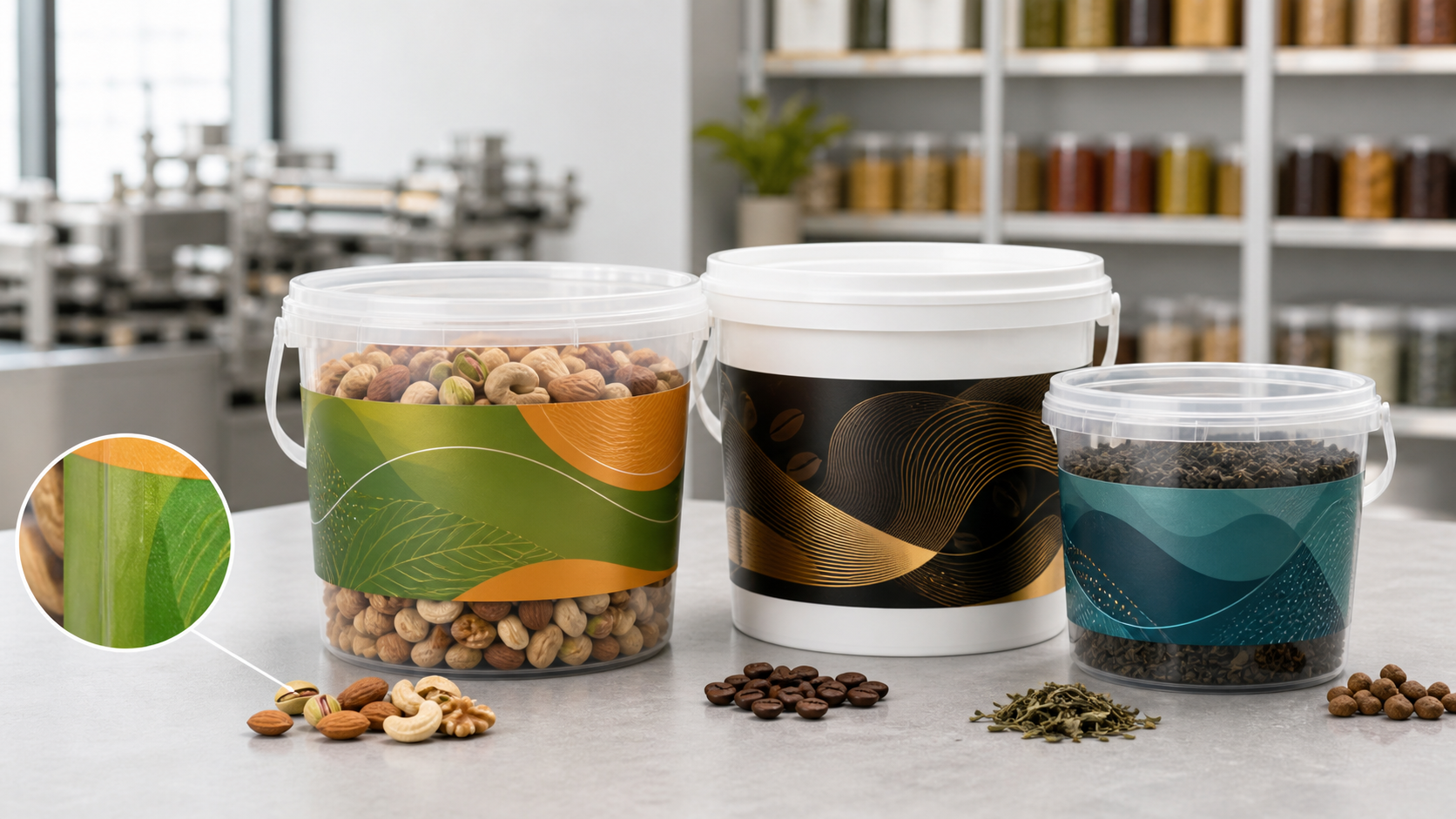
That makes the food bucket more than a container. It is also a product display, an information surface and a repeated brand touchpoint. For companies that need rigid, reclosable packaging, combining a food-grade polypropylene bucket with in-mold labeling can create a stronger and more durable presentation than a plain bucket with a conventional applied label.
This guide explains how in-mold labeling works, where it adds value and what food brands should evaluate before starting a custom PP bucket project with JM Pack.
What Is In-Mold Labeling for PP Food Buckets?
In-mold labeling, often shortened to IML, integrates a preprinted label into an injection-molded package during production. The decorated film is positioned inside the mold before molten plastic is injected. Heat and pressure form the bucket while bonding the label to its outer surface.
The finished decoration becomes part of the bucket wall instead of sitting on top like a separate pressure-sensitive sticker. There is no exposed adhesive layer and no loose label edge to catch during filling, packing, transport or repeated handling.
For food packaging, IML is especially useful when a brand wants detailed, wraparound graphics with a smooth, professional surface. It can display a logo, product photography, ingredient information, preparation instructions, certifications and brand storytelling in one coordinated design.
Why Packaging Has a Direct Effect on Food Brand Value
Good packaging must first protect the product, but its commercial role goes further. It shapes expectations before the lid is opened.
A clean, well-structured package can signal reliable manufacturing and careful quality control. Clear product information reduces buyer uncertainty. Distinctive colors and recognizable design elements help shoppers find the brand again. A secure lid and comfortable handle also affect how customers judge the product after purchase.
These details matter across retail, e-commerce and foodservice channels. In a crowded category, similar products can look interchangeable. A custom package gives a brand an owned visual asset that competitors cannot easily reproduce.
Seven Ways In-Mold Labeling Can Upgrade a PP Food Bucket
1. More Complete Visual Coverage
IML can cover a large area of the bucket with continuous, high-resolution artwork. Designers can use color, imagery and structured information across a broad curved surface instead of working within a small rectangular sticker.
That space can support both shelf impact and practical communication. The front can prioritize brand recognition, while side and rear panels carry ingredients, storage guidance, serving information or multilingual content.
2. A Smooth, Integrated Appearance
Because the label is incorporated during molding, the decorated surface looks flat and intentional. There are no visible label corners, uneven adhesive areas or misaligned sticker edges.
This integrated appearance is useful for brands positioned around premium ingredients, natural products, professional nutrition or gift-ready presentation. The package feels designed as one object rather than assembled from unrelated parts.
3. Better Resistance to Peeling and Edge Lifting
Applied labels can be damaged by friction, humidity, cartons, pallets and repeated handling. An edge may lift, or surface abrasion may make the package look older than the product inside.
An in-mold label is firmly integrated with the bucket surface, helping the decoration resist peeling and edge lifting through normal distribution and use. This supports a more consistent appearance from the filling line to the customer’s pantry or commercial kitchen.
4. Stronger Brand Differentiation
Food categories are often visually crowded. Nuts may emphasize natural ingredients and active lifestyles. Coffee and tea brands may need a refined, origin-led presentation. Pet food brands often communicate safety, nutrition and professional care.
IML gives each category enough design freedom to create a distinct visual language while using the same practical PP bucket format. Shape, transparency, color and graphics can work together instead of relying on the printed label alone.
5. Better Product Presentation Online
E-commerce buyers cannot touch a package before ordering. They depend on thumbnails, product-page images and short videos. High-contrast wraparound graphics and a recognizable bucket shape can make listings easier to identify at small sizes.
The rigid bucket also presents more consistently in photography than a flexible package that may crease or collapse. For livestream sales and social media, this supports cleaner product demonstrations and a stronger first frame.
6. Brand Exposure Continues After Opening
Food-grade PP buckets are often retained for storage because they are rigid, handled and reclosable. Every time the customer opens, moves or reuses the bucket, the integrated graphics remain visible.
That extended use can keep the brand in kitchens, pantries, shops and foodservice work areas longer than single-use secondary packaging. Reuse should never replace proper food-safety guidance, but it can add practical value and repeated brand exposure.
7. Decoration and Molding Are Combined
IML combines container forming and label application in one coordinated production process. For suitable order volumes, this can reduce separate post-molding labeling steps and improve decoration consistency.
However, tooling, label development and setup requirements are more involved than a simple stock sticker. Brands should evaluate total project volume, artwork stability and launch timing rather than comparing decoration methods only by unit price.
Why PP Buckets Are a Strong Platform for Food Packaging
Polypropylene is widely used for rigid food containers because it balances low weight, toughness and manufacturing flexibility. When produced with suitable food-contact materials and controls, a PP bucket can support direct food applications while providing practical benefits throughout distribution.
Key advantages include:
- Rigid walls that help protect product appearance.
- Secure lid options for reclosability and handling.
- Stackable formats that use warehouse and transport space efficiently.
- Handles that improve carrying for larger capacities.
- White, colored or transparent options for different brand strategies.
- Multiple decoration choices, including IML, screen printing and heat-transfer graphics.
JM Pack offers plastic buckets and pails for food, ingredient, retail and foodservice projects. The right combination of bucket, lid and decoration should be selected according to the product, filling process, supply chain and target market.
In-Mold Labeling Compared With Other Decoration Methods
Pressure-Sensitive Labels
Applied labels are flexible and practical for smaller runs, seasonal products or frequent artwork changes. They usually require less development time, but visible edges, alignment variation and exposure to abrasion should be considered.
Screen Printing
Screen printing is effective for logos, simple graphics and limited-color information. It can provide a direct-to-container finish without a separate label, although it is less suited to photographic imagery or complex full-wrap designs.
Heat-Transfer Decoration
Heat transfer can produce detailed graphics and can be a useful middle option for certain shapes and order quantities. Coverage, finish and process suitability depend on the bucket geometry and artwork.
In-Mold Labeling
IML is best suited to projects that value broad coverage, detailed graphics, an edge-free appearance and long-lasting decoration. It often makes the most sense when the design will remain stable and the expected order volume supports label and production setup.
There is no single best decoration method for every brand. The correct choice depends on visual goals, order quantity, change frequency, lead time and total delivered cost.
Food Products That Benefit From IML PP Buckets
Nuts, Seeds and Dried Fruit
Rigid buckets help protect product shape, while transparent areas can let buyers see color and ingredient quality. IML can frame the viewing window with natural graphics, nutrition cues and serving ideas. For more category-specific guidance, see our guide to PP plastic buckets for nut packaging.
Compact formats such as the 1200ml sealable round food-grade container and 2L PP plastic jar with lid can support sampling, retail and gift applications.
Coffee and Tea
Coffee beans and tea products often rely on origin, craft and premium positioning. A white or dark bucket with refined wraparound artwork can communicate this story, while a reclosable lid supports convenient repeated access. Barrier requirements should still be assessed for the specific product and intended shelf life.
Bakery Ingredients, Candy and Foodservice Products
Larger rigid formats can help bakeries, restaurants and ingredient distributors organize frequent-use products. The 4L round food-grade plastic bucket and 5L food-grade round plastic bucket provide room for clear identification, handling instructions and branded graphics.
Pet Treats and Dry Pet Food
Pet product packaging needs to communicate safety, nutrition and professional credibility. IML can organize feeding information and product benefits without sacrificing shelf visibility. The bucket’s handle and reclosable lid also improve everyday convenience for larger packs.
Bulk Ingredients and Commercial Packs
For food factories, wholesalers and foodservice operations, a 10L transparent food-grade PP pail can combine content visibility with a large identification area. Clear graphics help staff distinguish ingredients, variants or handling requirements quickly.
How to Plan a Custom IML Food Bucket
Start With the Product and Filling Process
Define product type, net weight, filling temperature, expected shelf life and storage conditions. Powder, granules, nuts, confectionery and wet foods place different demands on the bucket and closure. A package should be validated with the actual product and production process.
Select the Capacity and Shape
Capacity affects more than fill volume. It also changes shelf footprint, handling, pallet efficiency and artwork proportions. Review whether the project needs a compact retail container, a family-size handled bucket or a larger foodservice pail.
Decide Between White, Colored and Transparent PP
White buckets give artwork a controlled background. Colored resin can reinforce brand identity. Transparent PP allows product visibility, but designers must consider how the contents will interact visually with the label.
Develop Artwork for the Molded Shape
Bucket walls are curved and may include tapers, handles, ribs and lid features. Artwork should follow the approved dieline and keep critical text away from distorted or interrupted areas. Confirm color references, barcode size, mandatory information and safe zones before production.
Match the Decoration Method to the Order Plan
Consider annual volume, batch size, artwork change frequency and launch schedule. IML can deliver a premium integrated result, while screen printing or other methods may be more efficient for simpler graphics or smaller quantities.
Test Before Full Production
Approve physical samples whenever possible. Check color, alignment, surface finish, lid fit, stacking, drop performance and label integration. A screen image alone cannot reveal every issue that may appear on a curved molded package.
What to Check When Choosing a Food Bucket Supplier
A packaging supplier should support both container performance and decoration control. Important evaluation points include:
- Food-contact material documentation appropriate for the destination market.
- Stable bucket dimensions and reliable lid fit.
- Experience with IML and alternative printing processes.
- Artwork review, color standards and sample approval procedures.
- Capacity to support pilot orders, scale-up and repeat production.
- Quality checks for leakage, stacking, impact and visual defects.
- Clear communication on tooling, minimum order quantity and lead time.
JM Pack supports custom food packaging projects with food-grade PP bucket options, transparent and colored formats, logo customization, screen printing, heat transfer and in-mold labeling according to product and order requirements. Explore our food packaging solutions for a broader view of available formats.
Frequently Asked Questions
Is an in-mold label the same as a sticker?
No. A sticker is applied after the bucket is molded. An in-mold label is positioned in the mold and integrated with the container during the molding process, creating a smoother surface without exposed label edges.
Can IML be used on transparent PP buckets?
Yes, depending on bucket design, label construction and production setup. Transparent areas can be intentionally left visible so shoppers or commercial users can inspect the product.
Is IML always more expensive than a standard label?
Not necessarily on a total-project basis. IML requires upfront label and production preparation, but it also combines molding and decoration and can reduce separate labeling operations. Cost should be compared at the expected order volume.
What information is needed for a quotation?
Provide the product type, required capacity, estimated order quantity, preferred bucket color, lid and handle requirements, decoration method, artwork status and destination market. Filling and storage conditions are also useful.
Can JM Pack help choose between IML and screen printing?
Yes. The most suitable process depends on artwork complexity, coverage, order quantity, change frequency and target finish. JM Pack can review these requirements with the container selection.
Turn the Food Bucket Into a Brand Asset
Future competition in food packaging will not be based on capacity and price alone. Product protection, brand recognition and customer experience work together.
In-mold labeling helps a food-grade PP bucket deliver on all three. It creates a smooth and durable graphic surface, supports stronger visual differentiation and keeps the brand visible throughout handling and repeated use.
To discuss capacity, color, lid style, artwork and order requirements, contact JM Pack for a custom PP food bucket recommendation and quotation.