
The nut market has moved well beyond basic commodity packaging. Consumers now expect roasted nuts, mixed nuts, seeds and snack products to arrive crisp, clean and visually appealing. Retailers and foodservice buyers also want packaging that is easy to stack, carry, open and close.
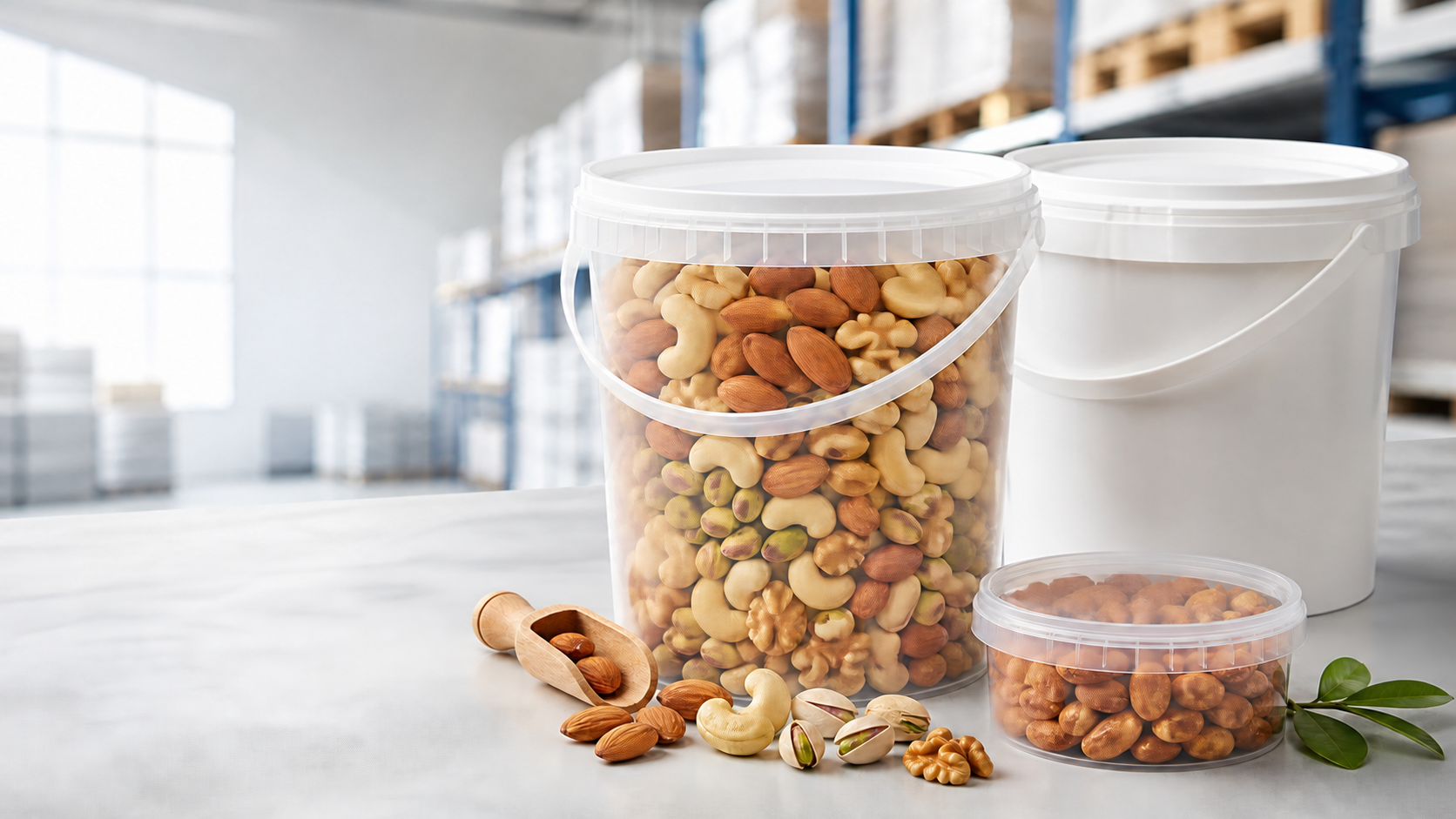
This is why more nut processors, private-label brands, wholesalers and ingredient suppliers are evaluating the PP plastic bucket for nut packaging. Compared with lightweight bags or fragile rigid containers, a well-designed polypropylene bucket can provide a practical balance of product protection, handling efficiency, reclosability and brand presentation.
However, not every bucket is suitable for nuts. Material quality, lid fit, capacity, filling conditions and supply-chain requirements all matter. This guide explains why PP buckets are gaining attention and how to select the right format for your product.
What Nut Packaging Needs to Protect
Nuts are relatively durable foods, but their quality can decline quickly when packaging does not match the product. Their natural oils can pick up unwanted odors, while humidity can soften the texture and reduce crispness. Breakage, dust and repeated exposure after opening can also affect the customer experience.
An effective nut package should help manage several risks:
- Moisture exposure that can reduce crunch and encourage quality loss
- Oxygen exposure that may accelerate flavor deterioration in oil-rich nuts
- Odor transfer during storage and transport
- Crushing and breakage during stacking or parcel delivery
- Contamination after repeated opening in kitchens or retail environments
- Poor shelf appearance caused by scratched, torn or collapsed packaging
Packaging cannot replace proper roasting, cooling, hygiene and storage controls. It works as part of the total system. The right container should support those controls from the filling line to the end user.
Why PP Is Well Suited to Nut Packaging
Polypropylene, commonly called PP, is widely used in rigid food packaging because it combines low weight with useful stiffness, impact resistance and moldability. It can be produced in opaque, translucent or transparent styles and shaped into containers ranging from small tubs to large handled pails.
For nut brands, those properties translate into several practical advantages.
1. A Rigid Container Helps Protect Product Appearance
Pouches are efficient and economical, but they offer limited resistance to crushing once they are packed into cartons or handled individually. A rigid PP bucket creates a protective shell around the contents. This can help reduce broken pieces and powder accumulation, especially for premium whole nuts, coated nuts and fragile snack mixes.
Rigid buckets are also easier to stack in warehouses, retail back rooms and commercial kitchens. When the bucket and lid are properly matched to the filling weight, the package can maintain a clean shape through handling and delivery.
2. A Secure Lid Supports Freshness Management
Nuts are sensitive to repeated moisture and air exposure. A closely fitted lid helps limit uncontrolled exposure during storage and distribution. After opening, the customer can close the container again instead of relying on clips or folded bag tops.
For products that require a higher barrier, the PP bucket can be combined with a liner, membrane seal, desiccant or oxygen-control solution after compatibility and food-safety evaluation. The bucket supplies the rigid outer structure, while the complete closure system is selected according to shelf-life targets.
Buyers can review JM Pack’s range of plastic buckets and pails when comparing lid styles, sizes and shapes for dry food applications.
3. Food-Grade PP Can Support Direct Food Applications
PP is commonly selected for direct food-contact containers. For any project, buyers should still confirm that the resin, color masterbatch, printing system and all contact components meet the requirements of the destination market.
A reputable supplier should be able to discuss the intended food, filling process, temperature, storage period and required documentation before production. This is especially important for imported packaging and private-label products sold across multiple markets.
4. Reclosability Improves Everyday Convenience
Family-size and foodservice nut packs are rarely consumed in one use. A bucket with a removable, reclosable lid makes repeated access easier for homes, bakeries, hotels, restaurants and snack shops.
The wide opening supports scooping, weighing and ingredient preparation. A handle makes larger packs easier to move, while the rigid body helps keep the storage area organized. These practical details can influence repeat purchases just as much as graphics or color.
5. PP Buckets Offer Flexible Branding Options
Nut products compete strongly on shelf presence. PP buckets provide a broad decoration area for product information, color coding and brand graphics. Depending on the bucket design and order quantity, decoration options may include labels, screen printing, heat transfer and in-mold labeling.
Opaque white buckets can create a clean food-industry appearance. Transparent or translucent buckets allow customers to see the product, which can be valuable for colorful nut mixes and premium whole kernels. Custom lid and handle colors can also differentiate flavors, grades or pack sizes.
6. Lightweight Strength Helps Control Logistics Costs
PP is lighter than glass and many metal formats. This can reduce package weight while avoiding the breakage risk associated with glass. Buckets can also be designed for stacking or nesting before filling, improving factory and warehouse efficiency.
The best result does not come from simply choosing the thinnest bucket. Wall thickness, handle strength, lid performance and pallet configuration should be matched to the net weight and distribution route. Sample filling and transit testing are essential before a large order.
PP Buckets Compared with Other Nut Packaging Formats
No single packaging format is best for every nut product. The sales channel and pack size should determine the choice.
Flexible Pouches
Pouches use little material and offer efficient freight and shelf display. High-barrier laminates can support freshness targets. Their limitations are crush protection, repeated closing and stability after opening. They are often best for smaller retail portions.
PET Jars
PET jars offer excellent clarity and a premium display. They can work well for smaller retail packs, but large jars may be less practical to carry and stack than handled buckets. The filling temperature and closure system must also suit PET performance.
Metal Tins
Tins provide strong protection and a premium appearance. They are generally heavier and can cost more, especially when shapes and printing are customized. Denting may also affect presentation.
Glass Jars
Glass offers strong consumer appeal and good barrier characteristics, but it adds weight and breakage risk. It is usually more suitable for smaller premium packs than bulk foodservice or export distribution.
PP Plastic Buckets
PP buckets are especially useful when the product needs a rigid, handled and reclosable pack in medium or large volumes. They fit family-size retail, club-store, wholesale, bakery, restaurant and ingredient-supply applications.
Choosing the Right Capacity for Nuts
The correct capacity depends on nut density, piece size, headspace, filling method and target net weight. Always test with the actual product rather than selecting a bucket from volume alone.
Small Retail and Sampling Packs
For compact packs, the 1200ml sealable round food-grade plastic container can suit nuts, seeds, snack mixes and dry ingredients. It provides a wide opening and a reusable rigid format for retail or food preparation.
The 2L PP plastic jar with lid offers another option for family-size products and visible shelf presentation.
Family-Size and Foodservice Packs
The 4L round food-grade plastic bucket is suitable for restaurants, bakeries, snack shops and larger consumer packs. Its handled format supports repeated movement and dispensing.
For buyers needing slightly more volume, the 5L food-grade round plastic bucket with lid provides a practical step up for roasted nuts, mixed nuts, seeds and dry food ingredients.
Wholesale and Bulk Nut Packaging
For high-volume foodservice or ingredient supply, the 10L transparent food-grade PP pail combines a larger capacity with product visibility. It can help commercial users identify contents and remaining stock without opening the lid repeatedly.
Before selecting a bulk bucket, test the maximum filling weight, handle comfort, lid closure force, stacking height and carton or pallet arrangement.
Quality Checks Before Ordering PP Nut Buckets
Ask the packaging supplier to evaluate the complete application, not just the requested volume. A useful project brief should include:
- Nut type, coating and oil content
- Planned net weight and required headspace
- Filling temperature and cooling process
- Target shelf life and storage humidity
- Retail, foodservice, wholesale or export channel
- Lid, tamper-evident and liner requirements
- Carton, pallet and container-loading plan
- Branding method and label area
- Applicable food-contact documentation
Request production samples and fill them with the real product. Check lid application, reopening, odor, leakage of small particles, handle performance and stacking. For export programs, transport simulation or trial shipments can reveal problems before mass production.
Custom Nut Packaging with JM Pack
JM Pack works with food brands, distributors, importers and foodservice suppliers to match container size, PP material, lid structure, handle and decoration method to the product. Standard designs can support faster sampling, while custom colors and printing can build a more distinctive product line.
Our broader food packaging solutions cover rigid plastic containers and complementary formats for dry foods, ingredients, sauces and commercial foodservice applications.
When requesting a quote, send the nut type, target filling weight, preferred capacity, annual quantity, destination market and artwork requirements. This allows the team to recommend a realistic packaging specification instead of quoting only by nominal bucket volume.
Final Takeaway
PP plastic buckets are becoming more common in nut packaging because they answer several operational needs at once. They protect product appearance, support secure reclosure, stack efficiently, carry well and provide enough surface area for branding. They are particularly effective for family-size, wholesale and foodservice packs where flexible packaging may be less convenient.
The key is to treat the bucket, lid and optional inner seal as one packaging system. Select the size with real-product testing, confirm food-contact requirements and validate the package under actual shipping conditions.
To develop a PP bucket for roasted nuts, mixed nuts, seeds or food ingredients, contact JM Pack with your product and filling details.
Frequently Asked Questions
Are PP plastic buckets suitable for direct nut packaging?
PP is commonly used for food-contact containers. Suitability depends on the resin, additives, colorants, closure components and destination-market requirements. Confirm the complete specification and required documentation with the supplier.
Can a PP bucket keep nuts fresh?
A closely fitted lid can help reduce unwanted moisture, odor and air exposure. Shelf life also depends on the nut product, roasting and cooling process, storage conditions and whether an additional liner or seal is required.
What bucket size is best for nut packaging?
Small retail packs may use containers around 1.2L to 2L. Family-size and foodservice packs often use 4L to 5L buckets, while 10L formats can suit wholesale or ingredient supply. The final choice should be tested with the actual nut density and target net weight.
Can PP nut buckets be customized?
Yes. Depending on the design and order quantity, options can include custom bucket and lid colors, labels, screen printing, heat transfer and in-mold labeling.
Are PP buckets reusable and recyclable?
Rigid PP buckets may be reused when appropriate and clean, and PP is accepted by some recycling systems. Actual recyclability depends on local collection and processing infrastructure, labels, inks and any mixed-material components.
3 thoughts on “Why More Nut Brands Are Choosing PP Plastic Buckets for Packaging”
Pingback: In-Mold Labeling for PP Food Buckets | JM Pack
Pingback: Transport-Stable PP Food Buckets | JM Pack
Great post,Thanks for sharing